How to Fish a 100mm Soft Swimbait for Pike and Other Predatory Fish
When targeting aggressive predatory fish, a 100mm soft swimbait can be an excellent choice for covering different depths and water conditions. The Nasty Shad 100mm features a streamlined baitfish profile, ribbed body and paddle tail that produces a noticeable swimming action even at a slower retrieve. It can be rigged with a jig head or other suitable soft-plastic setups and is useful for fishing rivers, canals, lakes and areas with active predatory fish.
Why Use a 100mm Soft Swimbait?
A 100mm swimbait provides a useful balance between baitfish size and casting versatility. Its realistic profile can imitate small to medium-sized forage fish, while the paddle tail creates vibration and movement that helps attract predators.
The ribbed body also adds flexibility to the soft plastic, allowing the lure to move naturally when retrieved through the water.
How to Fish a Paddle Tail Swimbait
One of the easiest ways to fish a paddle tail swimbait is with a steady retrieve. Cast beyond the target area and retrieve the lure at a moderate speed, allowing the paddle tail to work naturally.
For colder water or less active fish, try a slow retrieve with occasional pauses. Keeping the lure close to the bottom can also be effective when predators are holding near structure or deeper water.
A faster retrieve can be useful when fish are actively chasing baitfish. Changing retrieve speed is a simple way to find the presentation that works best on the day.

Best Rigging Options for a 100mm Swimbait
A 100mm soft swimbait can be paired with different hooks and weights depending on the fishing environment.
A jig head is a simple option for open water and allows the lure to maintain a stable swimming action. In areas with weeds or cover, an appropriately sized weedless hook can help reduce snags.
Choose the hook and weight according to the depth, current and cover you are fishing rather than using the same setup for every situation.
Target Species
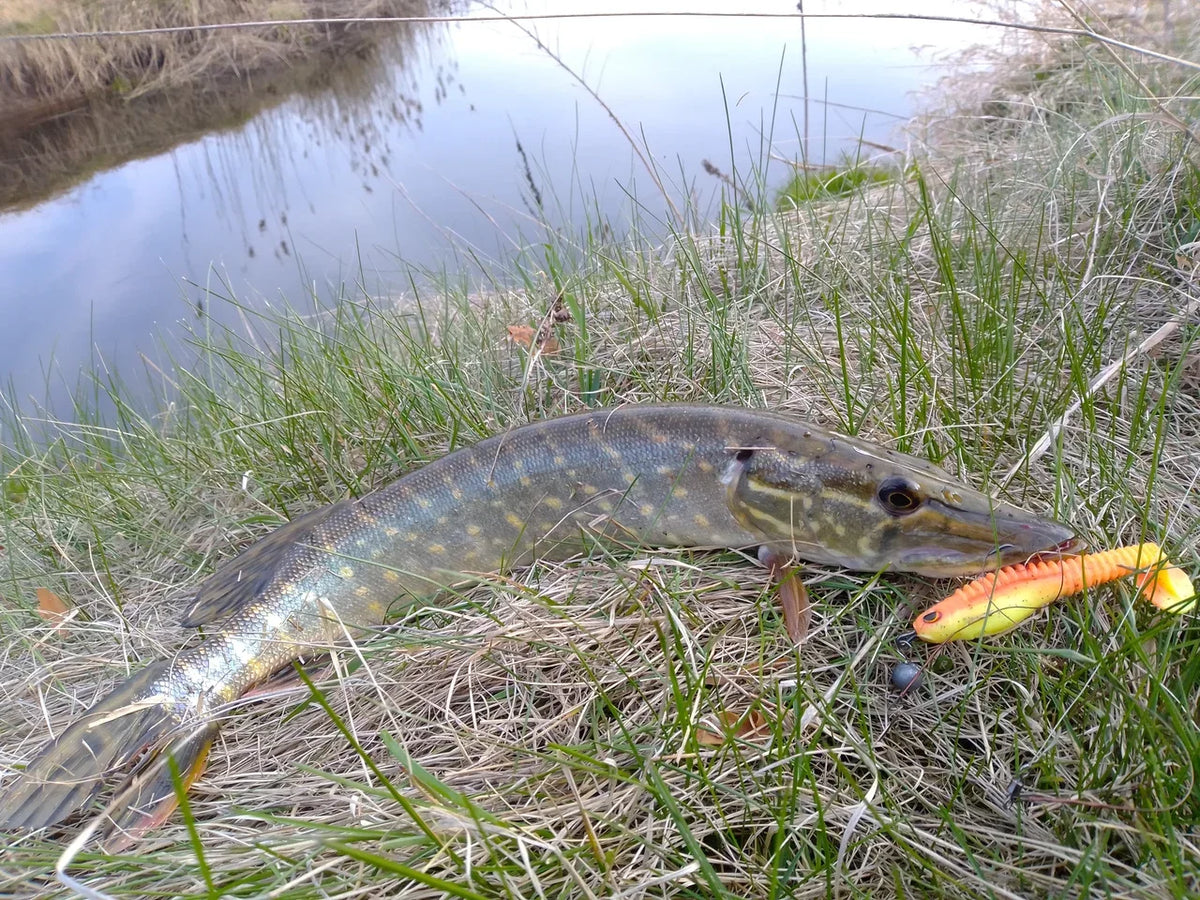
This style of soft swimbait is particularly suitable for aggressive freshwater predators. The fishing photos show the lure being used successfully for pike, which are well known for attacking baitfish-style soft plastics.
It can also be considered when targeting other predatory fish that feed on small baitfish, depending on local conditions and species.
When Should You Use a 100mm Swimbait?
A 100mm paddle tail swimbait is a versatile option when you want a baitfish presentation without using a large lure. It can be useful around:
- River channels
- Lake shorelines
- Weedy areas
- Drop-offs
- Current breaks
- Structure where predatory fish ambush baitfish
The key is to adjust the retrieve speed, depth and rigging to match the conditions.
Nasty Shad 100mm Key Features
- Length: 100mm
- Type: Soft swimbait
- Tail: Paddle tail
- Body: Ribbed baitfish profile
- Action: Natural swimming and tail vibration
- Best for: Pike and other predatory fish
- Recommended techniques: Steady retrieve, slow retrieve, stop-and-go
- Rigging: Jig head or suitable weedless setup

Frequently Searched Questions
What size swimbait is good for pike?
A 100mm soft swimbait is a versatile size for presenting a baitfish profile to pike, especially when smaller forage fish are present.
How do you retrieve a paddle tail swimbait?
Start with a steady retrieve and adjust the speed until the paddle tail produces a consistent swimming action. Slow retrieves can be useful when fish are less active.
Can you fish a 100mm swimbait near weeds?
Yes. With an appropriately rigged weedless hook, a 100mm soft swimbait can be worked around vegetation and other cover while reducing the chance of snagging.
What fish can you catch with a 100mm soft swimbait?
It can be used for predatory freshwater species that feed on baitfish. Pike are one of the target species shown with this lure.
Is a paddle tail swimbait good for river fishing?
Yes. The paddle tail produces movement in current, while adjusting weight and retrieve speed allows you to control the swimming depth.
Share:
Ripple Shad 125mm Soft Plastic Swimbait | Bass Fishing Lure for Big Predator Fish
Crazy Paddle Tail – 150mm Soft Swimbait for Big Fish